






What a Notary Does in Israel

Every notary in Israel is a lawyer, but very few lawyers are notaries. This guide explains what the law authorises a notary to do, what a notarial certificate proves in court, and what a lawyer must complete before being permitted to act as one.

A red notarial seal and ribbon on a certificate
Adv. and Notary Igal Mor
By Adv. and Notary Igal Mor
Updated · About a 7-minute read

Who is a notary

A notary is a lawyer authorised to certify, authenticate, witness and draw up legal documents across a wide range of matters. A notarial certificate serves as evidence in court of the identity of the people who signed the document, of the fact that it was signed in the notary’s presence, and of the fact that the signature was given of the signatory’s own free will and not under duress or deception.

A document signed before a licensed notary can serve as admissible evidence, not only in Israel but abroad as well.
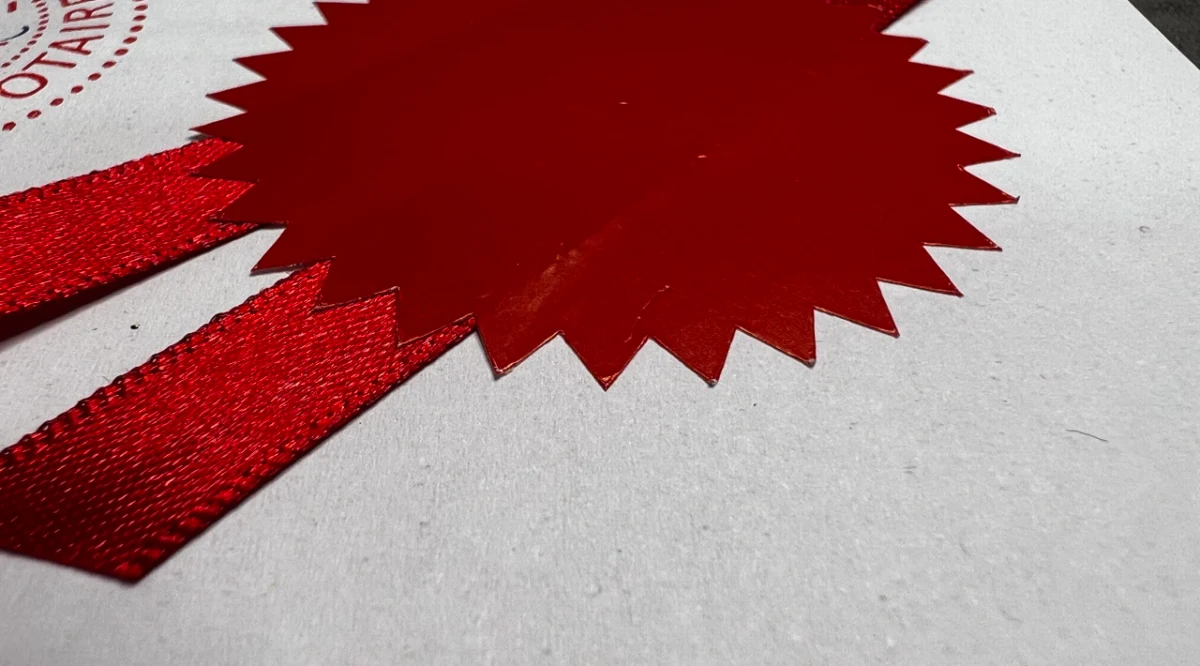
A red notarial seal and ribbon resting on a certificate
A notarial certificate with the red ribbon and seal, in the form issued in Israel.

Powers under the law

The Notaries Law and the regulations under it set out what a notary is authorised to do. The central powers are these.

  • Certifying a prenuptial financial agreement
  • Certifying a will made before an authority
  • Certifying an affidavit
  • Certifying a power of attorney
  • Certifying a translator’s declaration
  • Authenticating a signature on a power of attorney
  • Certifying that a copy of a document is a true copy

More than a stamp

A notary’s role goes well beyond signing a document. The notary acts as an impartial witness to the procedure, confirming that everyone involved is acting in accordance with the law. When a notary certifies documents and transactions, it adds a layer of reliability to the process and gives the documents a particularly strong evidentiary standing.

“Section 19 of the Notaries Law, 5736-1976 establishes an evidentiary presumption as to the correctness of what is stated in a notary’s certificate under the Law (…) so long as it has not been rebutted, there is no basis for doubting the correctness of what it states.”

Justice Bach, CA 380/88 Tukan v. Alnashashibi, 45(5) 410 (1991)

Lawyer and notary, the difference

Every notary is a lawyer. Very few lawyers are notaries. A lawyer who wishes to hold a notarial licence must meet a demanding set of conditions.

  • More than ten years in practice as a lawyer
  • Active membership of the Israel Bar Association
  • A record free of convictions involving moral turpitude, and free of suspension from the Bar
  • Completion of a dedicated notaries course and a specific qualification
  • A licence granted by a special committee at the Ministry of Justice, which convenes twice a year
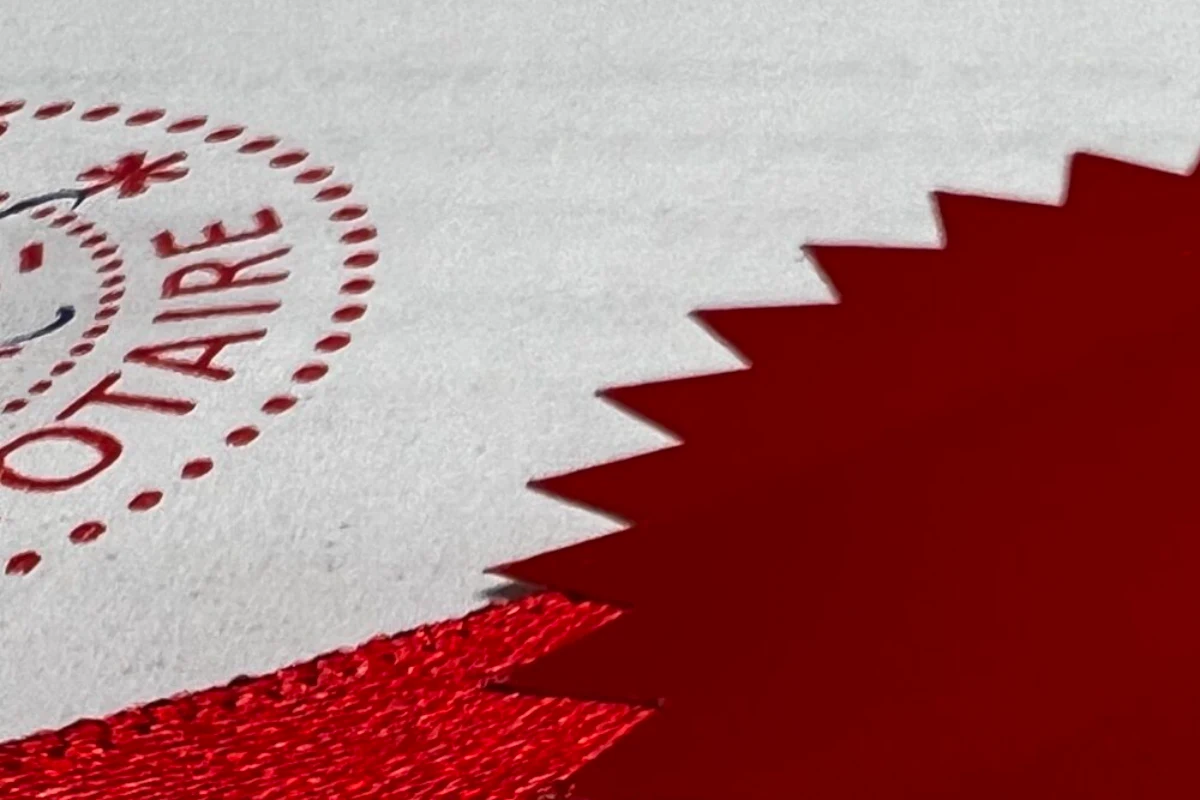
Close-up of the embossed notarial stamp pressed into the paper
The notarial seal is granted only after a decade in practice and a licence from the Ministry of Justice.

The official forms

Regulation 9(b) of the Notaries Regulations, 5737-1977 provides that the wording of notarial certificates must follow the forms set out in the Second Schedule. In other words, the certificate you receive is not drafted freely: it follows a form prescribed by law.

All fourteen forms, each in Hebrew, in Arabic and in a combined Hebrew and English version, together with a short note on when each form is used, are collected in one place: all the notarial forms under Regulation 9(b).

Binding wording. A notarial certificate is drawn up only according to the prescribed forms. Using a different wording may impair the certificate's validity before the authority it is submitted to.

In summary

A notary is not a lawyer with an extra stamp. The licence follows a decade of practice, a dedicated qualification and approval by a committee at the Ministry of Justice, and what it produces is a certificate the courts treat as evidence unless it is rebutted.

For advice on any notarial matter, contact us by phone at 02-5953322 or on WhatsApp at 050-441-1343.

Questions and answers

What people ask most often

Is every lawyer a notary?
No. A notary is a lawyer who has practised for more than ten years, completed a dedicated qualification, and received a licence from a committee at the Ministry of Justice.
What does a notarial certificate prove?
Under section 19 of the Notaries Law it carries an evidentiary presumption: what the certificate states is treated as correct unless it is rebutted.
Can a notary draft the document itself?
Yes. A notary is authorised to draw up documents as well as to certify and authenticate them, and for some documents, such as a notarial will, drafting before the notary is the point.
Are notarial fees negotiable?
No. They are fixed by regulations, identical at every notary in Israel, and updated on 1 January each year according to the consumer price index.
Does the certificate have a prescribed wording?
Yes. Regulation 9(b) of the Notaries Regulations requires the certificate to follow the forms in the Second Schedule.
Will the certificate be accepted abroad?
For many countries an apostille is required in addition. See our page on notarial and apostille services.
Notary Department

Need a notary in Jerusalem?

Tell us what the document is for and who is asking for it. That is usually enough for us to say which notarial certificate applies and what you need to bring.

A lawyer from the department, not a call centre We will get back to you as soon as possible No promises of outcome

You cannot copy content of this page