




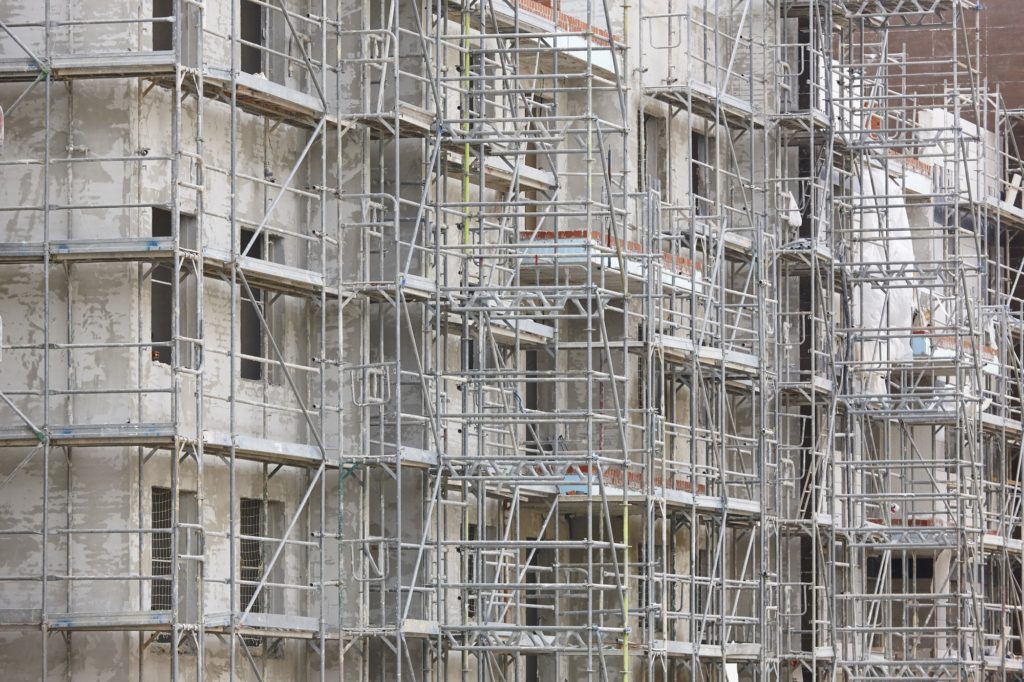

TAMA 38: What Happened to the Plan and What Applies Now
TAMA 38 is no longer an open route. The plan has expired, and urban renewal now runs through other mechanisms. This guide explains what changed, what happens to projects that already hold a permit, and what options remain for owners of apartments in an older building.

What this page covers
What TAMA 38 was
TAMA 38 was a national outline plan approved in 2005, aimed at strengthening residential buildings put up before the earthquake resistance standard. The incentive it offered was additional building rights, which funded the strengthening without the residents having to pay for it.
In practice two routes developed: strengthening the existing building while adding protected rooms, a lift and balconies, and demolition and rebuilding of the whole block. The second was the more profitable for developers, and it became the norm in most projects.
The plan has expired
The National Planning and Building Council decided as early as 2019 to bring the plan to an end, with a formal date set for October 2022. Transitional arrangements and extensions followed in authorities that were advancing replacement plans. As of 2026 the plan has expired, and no new permit applications can be made under it.
The reasoning given was that the plan operated at the level of the single building, without a district view of the neighbourhood, and produced gaps between authorities. Local authorities are instead expected to advance renewal plans of their own. The pace of approval is uneven, and in some of the larger cities no replacement plan has yet been approved.
What this means for apartment owners: the first question is no longer whether to join a TAMA 38 project, but which route is open at all in your city. The answer varies from authority to authority, so it is checked with the local committee before anything else.

Projects that already hold a permit
Expiry of the plan does not cancel projects already under way. A building permit lawfully granted before expiry remains in force, and the agreements made under it continue to apply.
Three points nonetheless call for checking right now:
- Validity of the permit. A building permit is valid for three years. If building did not start within that period the permit lapses, and there is now nothing to renew it under on the same terms.
- The securities. Confirm that the guarantees given to residents are in force, and that release letters from the financing bank have been received.
- The timetable in the agreement. A project stalled at the permit stage raises a contractual question of breach, so the timing and cancellation clauses are worth examining.
The routes that exist today
TAMA 38 has meanwhile become a generic expression. When people use it today they usually mean urban renewal in an existing building, not the plan itself. The projects continue to happen, but along other routes. Three main paths are open to owners of apartments in an older building:
- A local renewal plan. A plan the local authority advances at neighbourhood or district level, setting the building rights. This is the route intended to replace TAMA 38, but it exists only in authorities that have completed the planning work.
- The route allowing a project to advance alongside a plan, designed to bridge the period in which no approved plan yet exists. Its use in practice has been limited.
- Evacuation and reconstruction. A route for whole districts, in which several buildings are cleared and new ones built in their place. It suits a district rather than a single building, and is governed by separate legislation.
Each route carries a different majority requirement among the apartment owners, set by statute rather than by the agreement with the developer. In evacuation and reconstruction, for example, the majority required in a single building is higher than that required in a multi building district on certain conditions. The majority applying to your case needs establishing before the process begins.
What owners should check
- What is permitted in your city: whether a renewal plan has been approved, and what stage it has reached.
- The condition of the building: year of construction, the state of the structure, and the existing and planned building rights.
- The residents committee: who represents the owners, how it was chosen, and the limits of its authority. A committee acting without a clear mandate is a source of internal conflict.
- A lawyer for the residents, separate from the developer lawyer. The fee is usually paid by the developer, but that lawyer represents the residents alone.
- The securities: a performance guarantee, a statutory sale guarantee, a rent guarantee for the period of decanting, and a tax guarantee.
- The consideration: not only the number of square metres, but the specification, the floor, the parking space, the storeroom, and the dates.

An owner who does not agree
Every renewal project has owners who do not want it. Objecting is not in itself a ground for anything: an owner is entitled to weigh his own position, and sometimes the refusal is entirely reasonable, for example where the consideration is inadequate or where personal circumstances make decanting impossible.
The law distinguishes reasonable refusal from unreasonable refusal. Where a court or the Registrar of Land holds that the refusal is unreasonable, remedies are available against the refusing owner, including liability for the loss caused to the other owners and the appointment of someone to sign in his place. Alongside that, the law recognises circumstances in which refusal is justified, for example where an elderly owner or an owner with a disability has not been offered arrangements suited to them.
Dealing with an owner who does not agree therefore begins with establishing what lies behind the refusal, not with a legal proceeding.
Every case is examined on its own facts. For a consultation with a lawyer from the real estate department call 02-5953322, send a WhatsApp message to 050-4411343 or leave your details in the form below, and we will get back to you as soon as possible.
What people ask most often
Can one still join a TAMA 38 project?+
We signed with a developer and there is still no permit. What now?+
What is the difference between single building renewal and evacuation and reconstruction?+
Who pays the residents lawyer?+
One owner refuses. Is the project stuck?+
All Real Estate Department pages
An older building, and you are not sure what is open to you
In urban renewal we represent the apartment owners opposite the developer: vetting the developer, drafting the agreement and the securities, and accompanying you through to delivery. Tell us about the building and the offer, and we will accompany you.